

Closing a business is not always a sign that something failed.
Sometimes, it is the clearest sign that the person who built it has changed.
After nearly seven years as the owner of a traditional ABA company, Nikeda made the difficult decision to close it. She loved the children. She loved her staff. But the uncertainty surrounding insurance, contracts, and operating a clinical organization in Florida had become too much.
What came next was not an exit from behavior analysis. It was a reimagining of how she could use it.
From behavior technician to business owner
“My origin story actually is a story that started the pivot into workforce development and RBT training. I always like to explain how I came from being a BT to an RBT to a BCBA to a clinical owner, and now into the workforce development field.”
“I’ve been a BCBA since 2019. I think everybody has a story. They worked at a company, they said, ‘Hey, I can do this better’. So that’s my spin-off. I started right at the beginning of COVID, which was actually, despite everything that COVID was, a great time to start a company in ABA. I feel like I’m going to be one of those old-timers saying, ‘I remember those times,’ because it really was a good time for business. It made things a little bit easier to get into. I see a lot of questions that newcomers are asking where I’m like, I kind of bypassed some of those insurance restrictions because it was COVID.”
“But more recently, with what was happening with insurance here in Florida, I was thought, ‘You know what? I don’t feel like doing this anymore.’ For as much as I loved the kids and I loved my staff, I just couldn’t live with the uncertainty and changes being made. So, I decided in 2025 to get ready and downsize.”
“In June 2026, we officially let our last client and staff go. So, it was a bittersweet journey of almost seven years open, but I really enjoyed it.”
Closing the company gave Nikeda space to consider what she wanted her next chapter to look like.
She was not finished with behavior analysis.
She simply wanted to use her experience differently.
Finding the next opportunity
As she began looking beyond the traditional clinical model, Nikeda kept noticing the same problem: people were searching for ways to enter the field, but few were being introduced to it intentionally.
“I always say I stumbled into the field by accident. I didn’t get into this field until my 30s. It made me think, ‘How do I get others to find this field on purpose?’ And that’s where the workforce development idea came in.”
“I want to partner with helping agencies and second-career changers. I want to partner with high schools. Those 18-year-olds who are about to graduate could graduate with their RBT certification. We also have lots of great kids transitioning out of the foster care system who need help. Obviously, I want you to have a passion for kids. We don’t want you getting into this field without having love for children. But you can take your 40-hour training, do your assessment, take your exam, and be ready within 60 days after graduating. There are not a lot of fields where you can do that and still make a decent living.”
“I see other companies that offer the 40-hour training, but I don’t see workforce development. So I was like, ‘Bingo. That’s a lane for me.’”

Building something different
That observation became the foundation for her new business.
Rather than creating another traditional ABA company, Nikeda began building a workforce-development model designed to introduce people to the field and prepare them to become RBTs.
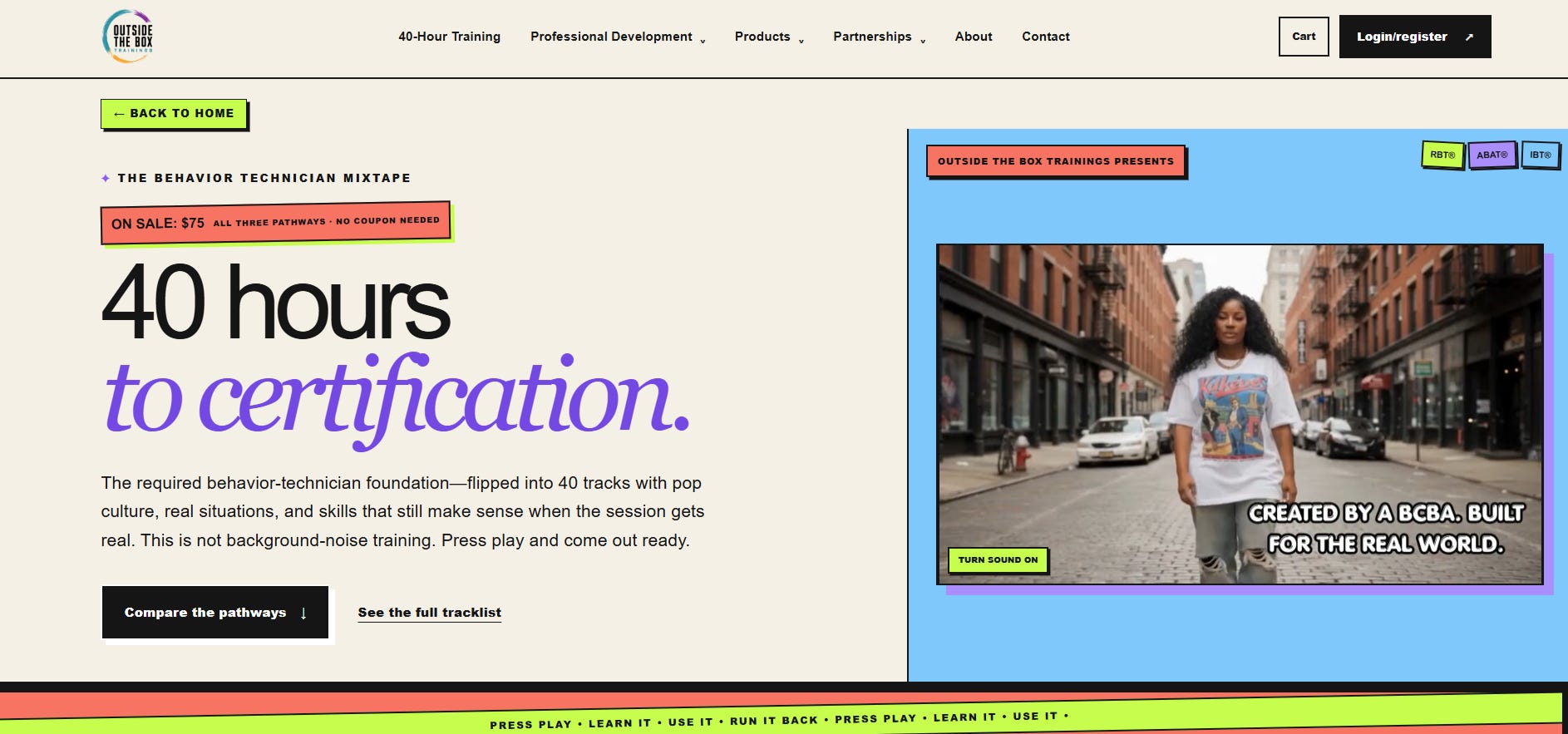
“We technically just opened in January, so all of this is new. We just launched our own 40-hour training called The Behavior Technician Mixtape, 40 hours of certification. We just completed our first cohort, and that has been great.”
“I’m doing free cohorts through the end of the year because I know that, with workforce development and trying to get contracts, they want to see numbers and know exactly how many people finished the courses. I would love to eventually partner with colleges and bring cohorts there as well.”
The advice she wishes she had
Building something without many existing examples has required Nikeda to make decisions as she goes.
When I asked what might have made the process easier, her answer was immediate.
“I would say find mentorship. That is a huge thing. I say that because I didn’t have that piece initially, and it would have made things much easier.”
“What I did find was other BCBAs, and we just wound up doing it together. Find someone who can come with you on the journey to bounce ideas off of. Sometimes you have all of the information. You just need somebody to bounce the information off of. Sometimes it’s really that simple.”
“It was also helpful having people who were not necessarily in my field to bounce ideas off of and tell me, ‘Nope, that’s too little,’ or, ‘That’s too much.’ Something else I would tell others is to look for free mentorship programs, too. I’m now part of SCORE, and my mentor is a fintech startup founder. She’s amazing with the resources and information that she gives me. I would definitely say look at your local mentorship programs because they’re there. We just don’t use them.”

What business ownership taught her
Mentorship gave Nikeda people with whom she could test her ideas.
Her previous experience as an ABA business owner also gave her a much clearer understanding of how she wanted to operate this time.
“I would say two things. As an ABA business owner, especially since everybody wants to be one, hire slow and fire fast. I learned that the hard way. That’s a big one, and I think that can apply to any business. Hire slow and fire fast because a bad apple will ruin everything.”
“Another mistake, and this is another reason why I was just tired of managing staff, was being too nice and friendly. It’s never enough. You can sell ice cream and somebody is still not happy: ‘Why don’t you have vanilla with pineapples?’
Creating training people actually want to complete
This new model also allows Nikeda to build with a much leaner team.
Instead of managing a large clinical workforce, she uses technology and outside support to turn her knowledge into scalable training.
“Tech is amazing because, for one, it’s my AI twin that’s teaching the courses I’ve created. I’m using HeyGen for that. Of course, we’re using Canva. I tried to create some things myself. It just didn’t work out, so then I started hiring people from Fiverr to make small promotional videos and things like that. I’m getting better with it, but HeyGen is my go-to because that’s where I create my videos.”
A training library with personality
Technology may help her deliver the courses, but Nikeda’s personality is what makes them different.
She is intentionally moving away from the dry, overly clinical training experiences many RBTs are accustomed to completing.
“We created our trainings not to be your standard training. In my 40-hour course, my girl is out there leaning on a G-Wagon. She’s having fun. Her hairstyles are changing. Her voice is different. She’s giving real-world scenarios. Even her dress is much different from what you would see in a standard 40-hour training. I think that’s what brings people in. I have great reviews on that.”
“We’re about to launch our annual membership for ABA companies. We have our core 12 PDUs, but we also just expanded it. We have mandated reporter training for ABA. We have a whole 12-point cultural competency training touching everything from linguistics to ‘don’t touch my hair’ and knowing the families and houses that you’re in. What are the hierarchies in the household? We’re touching on all of those points.”
“We just created a training for burnout called You Can’t Give From an Empty Token Board. I love the creativity that we’re getting into. I just created another one that I’m super excited about. It’s called You Don’t Work at Chuck E. Cheese: Stop Saying “No Thank You” and Teach Behavior. That one is a really funny training, and I can’t wait to get into it.”
“I’m really proud of what I’m creating and making it relatable. We have a series just for RBTs in a home setting. No one touches on what it’s like being in a session in a home. I’m loving how we’re able to jump from topic to topic, but it is still super relatable to what’s happening in the RBT’s daily work life.”
Betting on herself again
What she is building is creative and entertaining, but it is also strategic.
Nikeda wants to develop a library that organizations can continue using and that can support her life beyond a traditional clinical schedule.
“I’m just trying to build something that lasts. I’m excited because these are things that will outlast the year. These are things that will still be relevant in two years. I’m just excited to keep building the library out.”
“I’m betting on myself again, stepping out of the ABA clinical world, betting on myself again, and knowing that this is going to work out. I see people saying, ‘I’m tired of being a BCBA. What can I do?’ You have to find your own lane. You have to think outside of the box. If you love behavior analysis, figure out how to incorporate it.”
Her business is still new, and she readily admits that betting on herself again is scary.
But this time, she is building from years of experience, a clearly identified need, and a vision that extends far beyond one ABA company.
In fact, she recently pivoted into senior care. Nikeda explained how she’s exploring how her background in ABA can support seniors and individuals living with dementia, as well as the caregivers and staff who work with them.
“This is a direction I had to intentionally seek out because it wasn’t sitting under a job title that said “BCBA.” It required me to recognize how transferable my skills are and identify where they could meet an unmet need. This will also become part of the Outside the Box Trainings story, as we plan to begin developing a specialized training library for professionals and caregivers who support seniors and individuals with dementia during the first quarter of next year.”
I do think that this may resonate with other professionals who feel ready to pivot but may be limiting themselves to opportunities that specifically advertise for a BCBA. Sometimes creating your own lane means looking beyond the job title and recognizing where your skills can make an impact.”
I think she may be right about that.
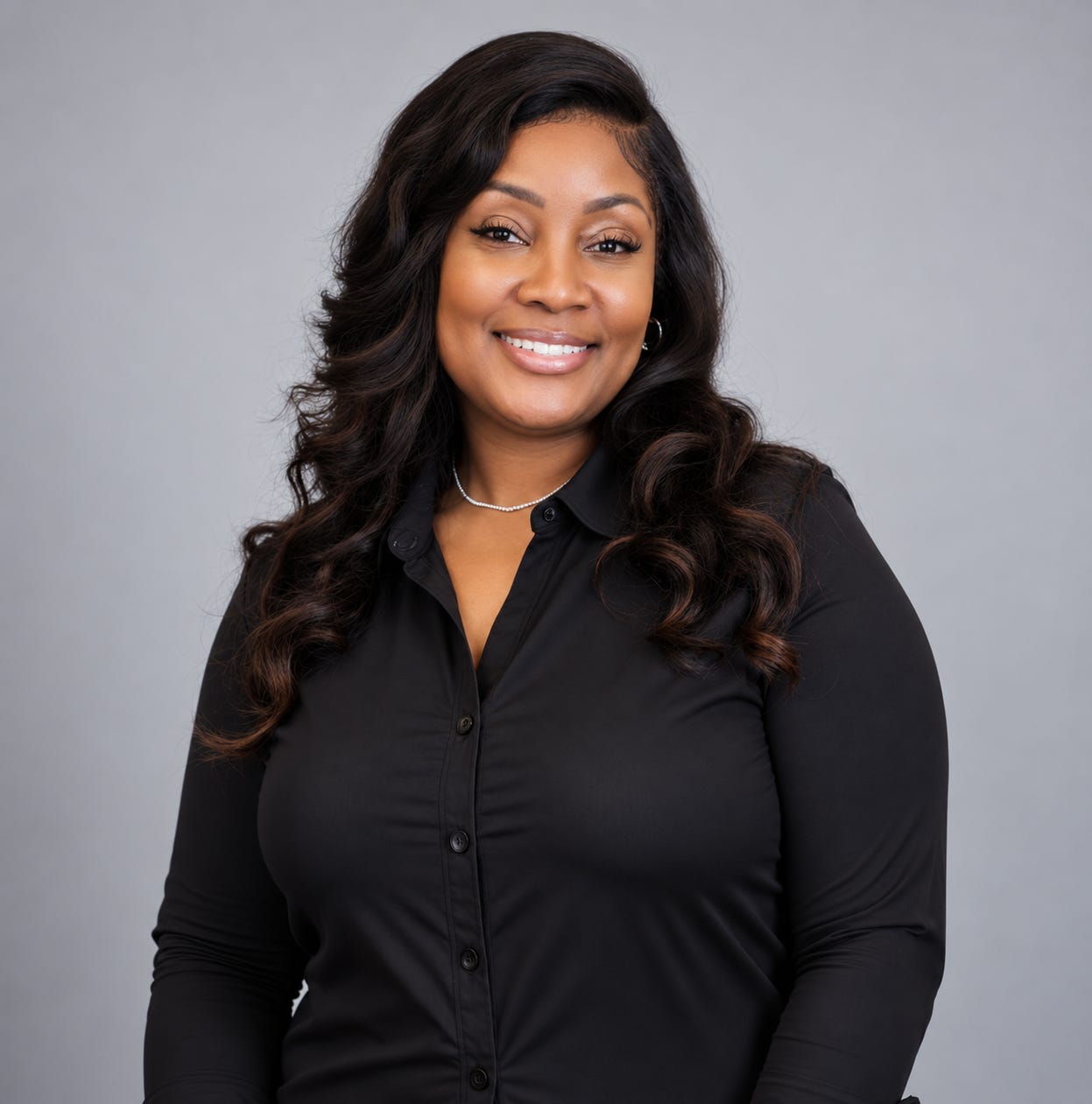
For more information about Nikeda visit: Website
Independence can look like this, too
Nikeda’s next chapter is still being built. That is precisely what makes it worth sharing.
She did not wait until every detail felt certain. She paid attention to the problems she kept seeing, recognized the value of her experience, found a lane that felt like her own, and began building.
Going independent does not have to mean opening a traditional clinic. It can mean closing one.
It can mean serving an entirely different population, creating education instead of delivering therapy, building with technology, or taking behavior analysis into a setting that has barely encountered it yet.
Ready to build your version of independent?
You do not have to figure out your independent path alone.
Inside the Going Independent community, BCBAs are building practices, consulting offers, trainings, resources, and careers that do not always fit the traditional mold. Members get access to candid conversations, practical templates and guides, live Office Hours, behind-the-scenes business insights, and a community of other BCBAs willing to help you think through the next move.
If you have the knowledge but need people to bounce ideas off of, this is exactly why I built the community.